

搜展位
搜全站

北京力科惠泽科技有限公司

已通过仪器信息网认证
金牌7年

400-616-7676转2330
力科惠泽官方客服电话,请放心拨打
已通过仪器信息网认证
【文献转载】PNAS | 抗生素环丙沙星对土壤病毒群落及N2O产生的影响机制
文献信息:
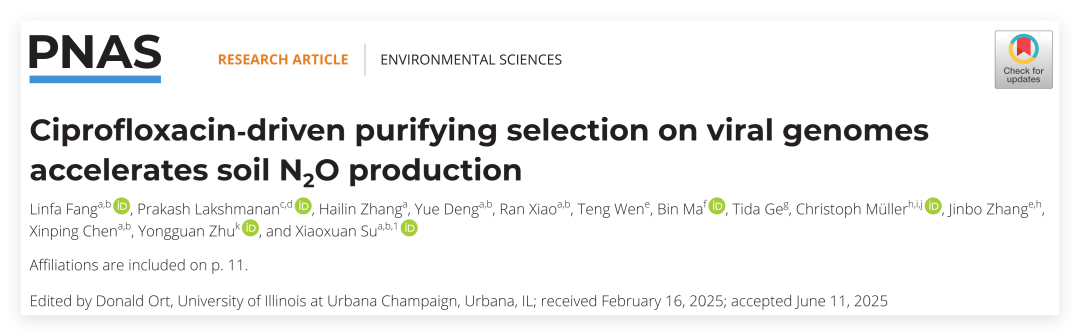
Significance: Viruses, the most abundant biological entities, have great potential in regulating nutrient biogeochemistry and influencing ecosystem functions. However, their contributions to biogeochemical cycling and greenhouse gas emissions, particularly under environmental stress, remain largely unexplored. We report that antibiotic stress increases viral contributions to greenhouse gas N2O production by 18 to 29%, thereby advancing our understanding of the vital roles of viruses in biogeochemical cycles. Our results also reveal that antibiotic stress induces synonymous mutations in viral genomes, facilitating viral adaptation to hosts and promoting interactions with denitrifiers, which in turn enhances their metabolic potential. This study opens avenues for understanding the role of viral evolution in biogeochemistry, particularly in the context of increasing environmental stress of the Anthropocene.
Abstract: Viruses are ubiquitous regulators of microbial dynamics and may thus greatly influence global microbial-driven greenhouse gas emissions. Anthropogenic stressors, such as chemical contamination, are likely to amplify these viral contributions; however, their global significance and underlying mechanisms remain elusive. Utilizing 15N tracing, metagenomics, and laboratory assays, we explore soil viral communities and their evolutionary potential under the stress from antibiotic ciprofloxacin (CIP), focusing on their roles in regulating nitrogen cycling and N2O production. Through isolation and reinoculation of soil viruses, we demonstrate that CIP stimulates soil denitrification-derived N2O production, with 18 to 29% of the increase attributed to viral activity. Under CIP stress, soil viruses shift toward a lysogenic lifestyle, promoting mutualism with denitrifiers by horizontally transferring viral denitrification-related auxiliary metabolic genes (AMGs). The observed synonymous mutations in these AMGs, driven by CIP, suggest enhanced purifying selection, likely optimizing codon usage to align with host preferences. This optimization likely enhances the expression of denitrifying AMGs and increases N2O production. This study provides insights into the overlooked role of viral dynamics and genomic mutations in modulating N2O production under stressful environments, highlighting their evolutionary significance and impact on biogeochemical cycles in the Anthropocene.
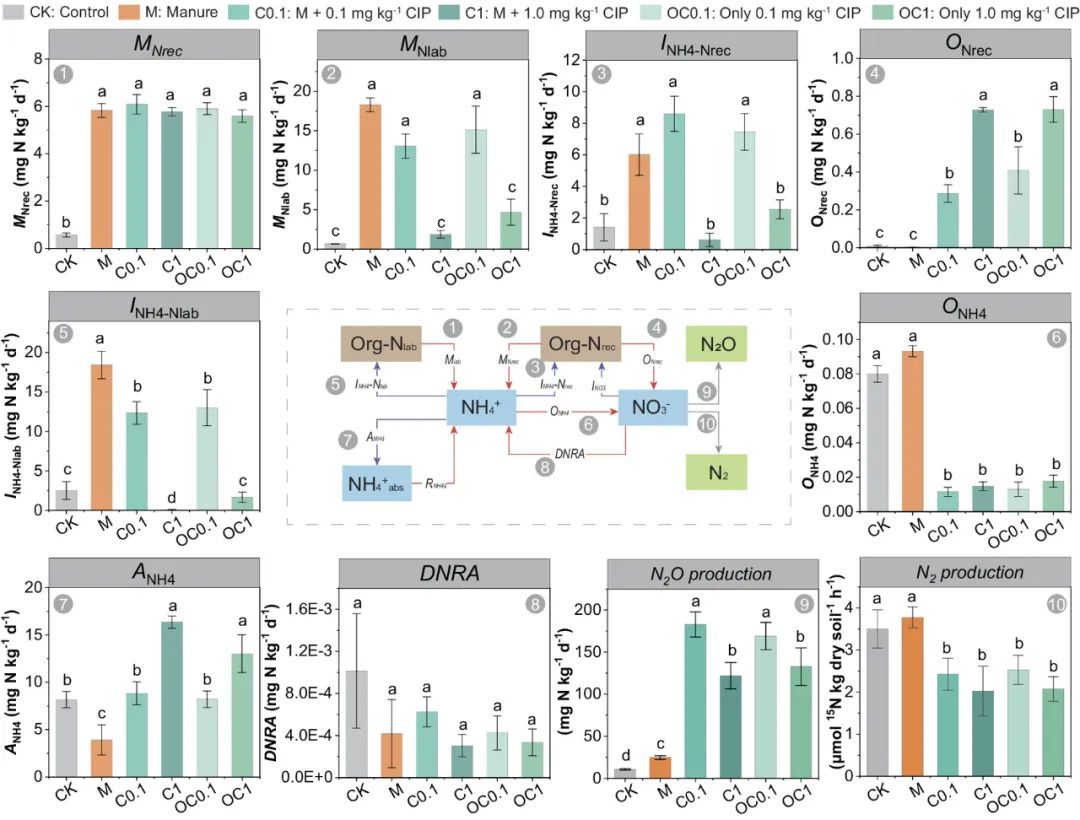
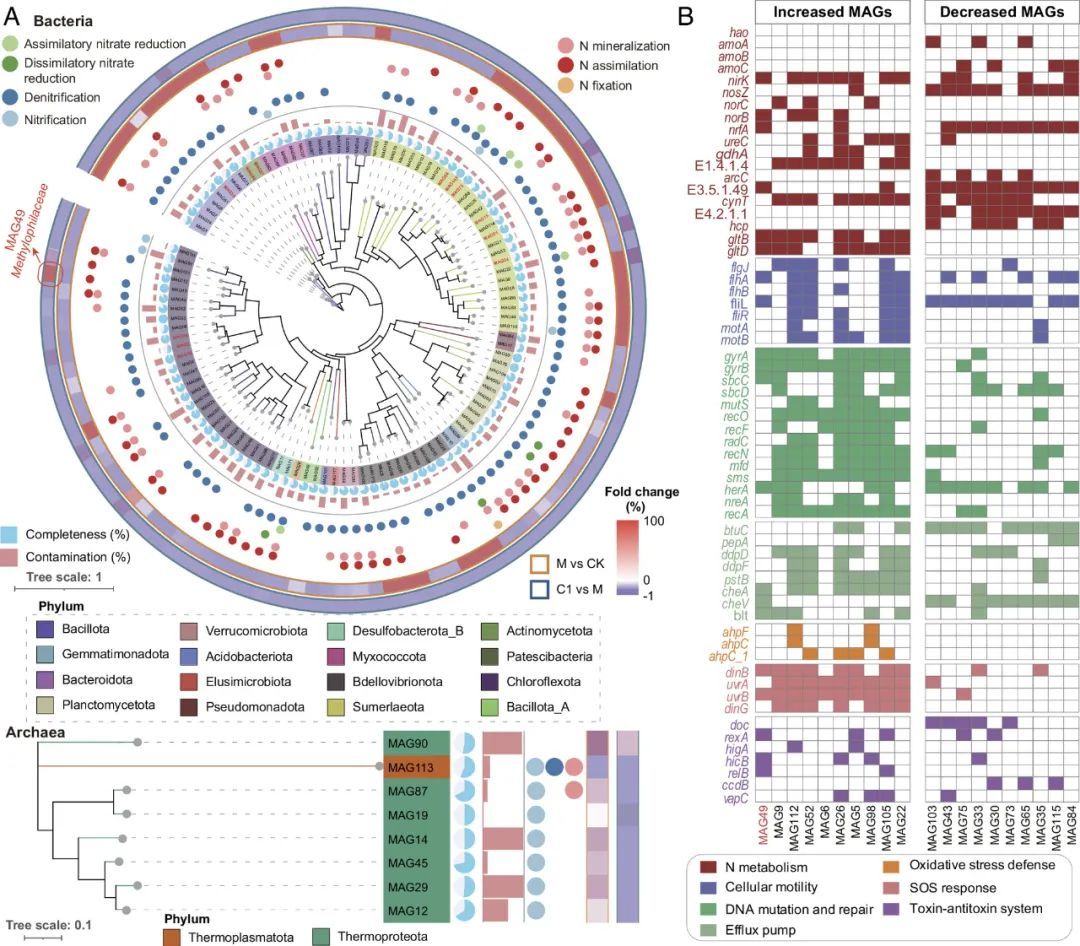
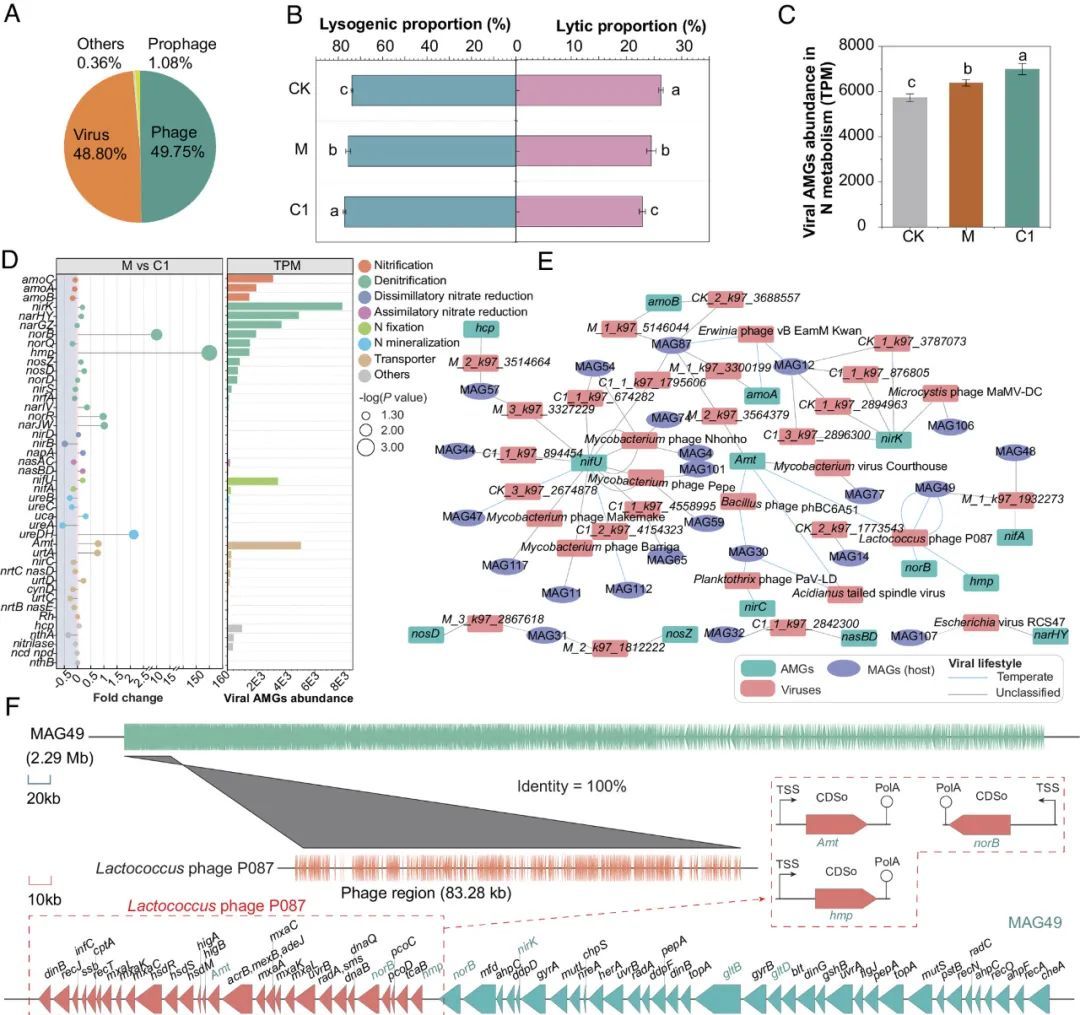
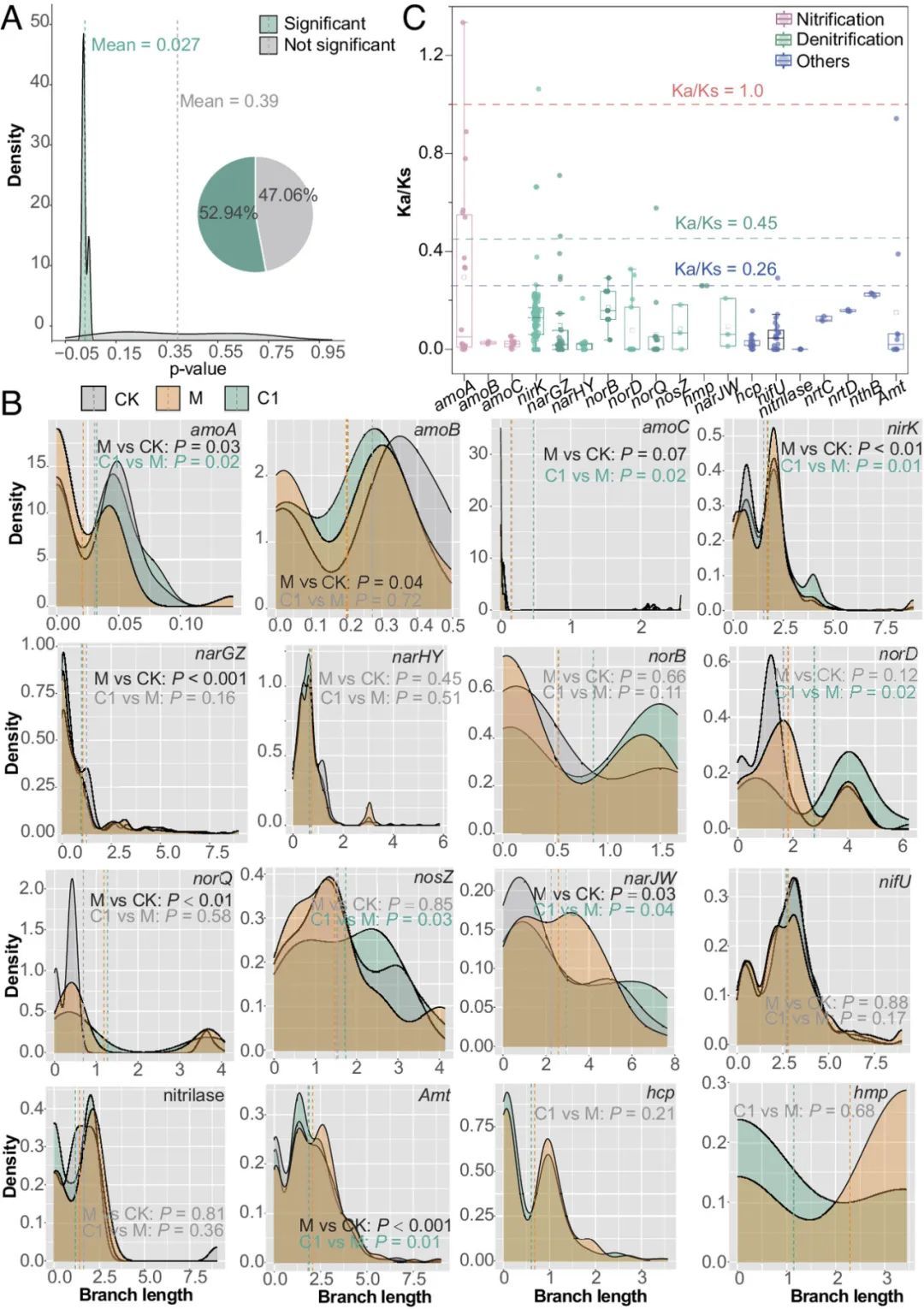
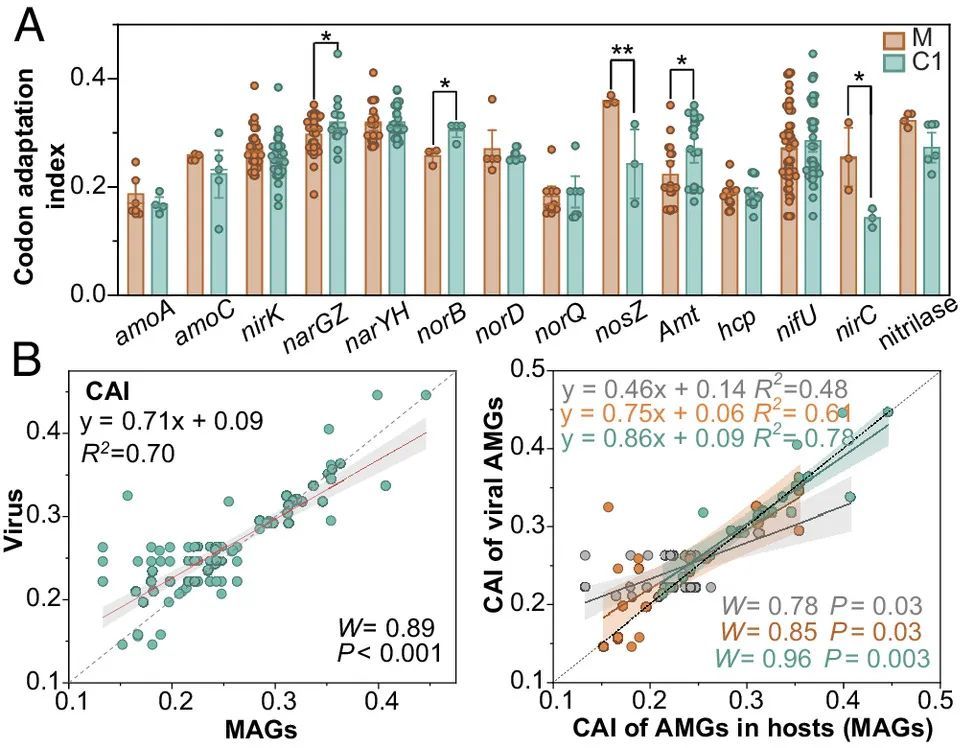
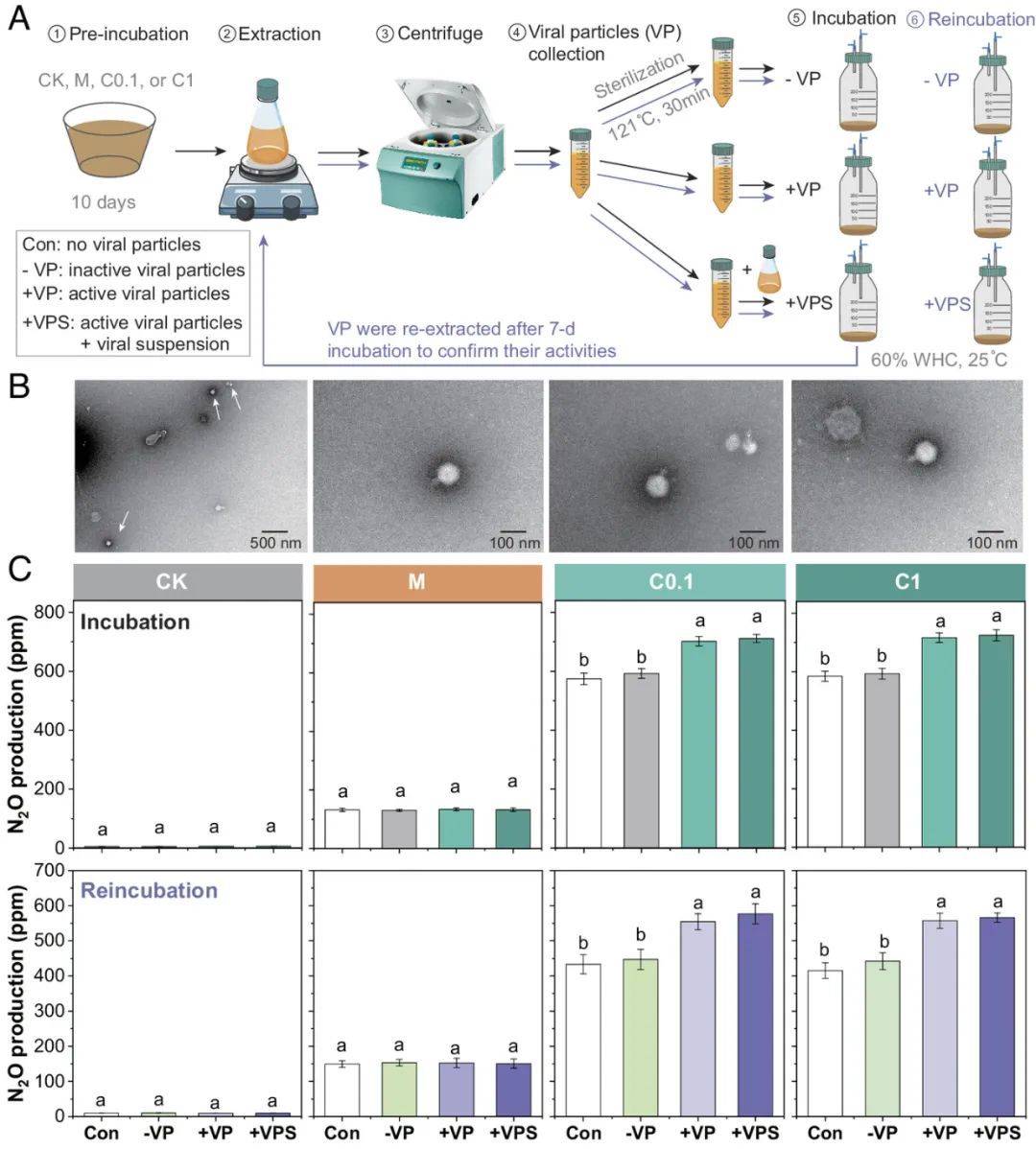
Fig. 6. VP extraction and validation. (A) Schematic diagram showing soil VP extraction, incubation, re-extraction, and reincubation experimental design. (B) Transmission electron microscope images of VP in soil extraction. (C) The cumulative N2O production in soils inoculated with active or inactive VP on day 7. The top row shows the cumulative N2O production during the first 7-d incubation following viral inoculation, while the bottom row depicts production during the second 7-d incubation after reinoculating the soil with extracted VP from the first incubation. Different letters indicate significant differences among treatments (P < 0.05). Con, control, no viral particles; −VP, inactive viral particles; +VP, active viral particles; +VPS, active viral particles + suspension.
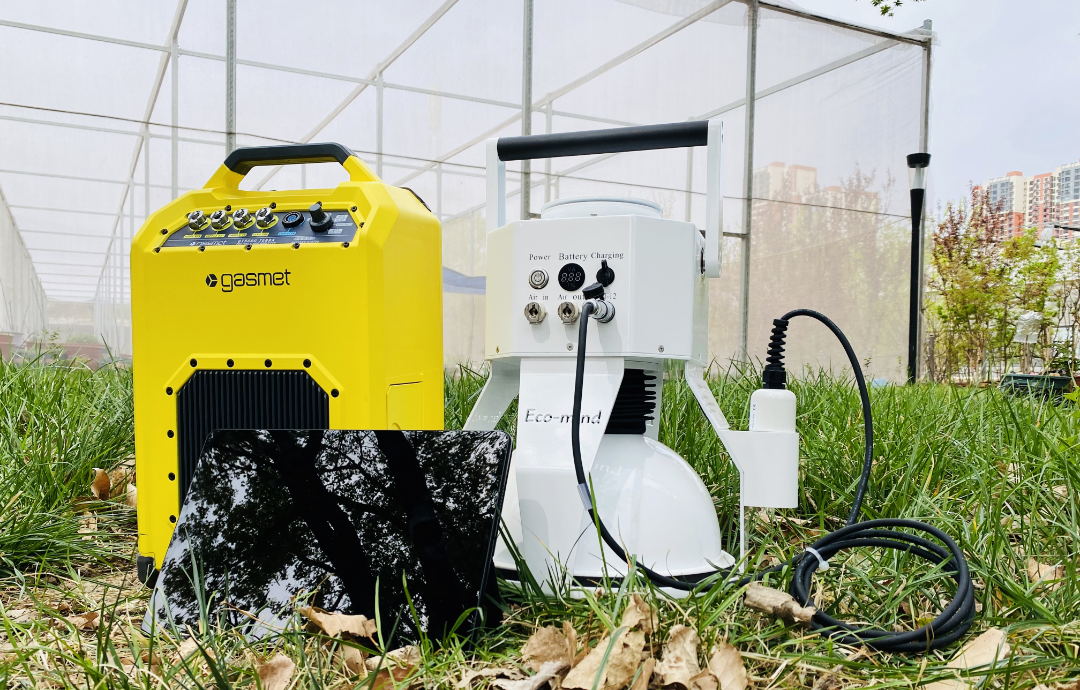
GT5000便携式多参数土壤呼吸测量系统是芬兰Gasmet公司生产的一款基于傅里叶变换红外光谱(FTIR)技术的便携式高精度土壤温室气体排放监测系统。该仪器可以在数秒内同时测定多种主要的温室气体成分,如:N2O,CH4,CO2,H2O,CO和NH3,且测量精度可达ppb级。GT5000便携式多参数土壤呼吸测量系统可用于农田,湿地,森林,牧场,电厂,火灾现场等各种环境中的温室气体通量测量。
采用傅里叶变换红外光谱技术;
同时测量N2O,CH4,CO2,H2O,CO和NH3等6种温室气体,最多可同时测量50种气体;
多种无线连接方式,如WI-FI或蓝牙。无需专业知识,用户可通过导航进行操作;
一键测量和即时的在线处理结果;
五种不同的视图展示相关的测量信息;
自动气室有机械臂,可缓慢升降;
通气口的设计可确保稳定的大气压力,且不会通过反向扩散影响测量;
气室的内部进出回路可有效的促进气体混合
测量原理:FTIR傅里叶变换红外光谱;
气体测定种类:可同时测定50种气体;
响应时间:通常<120s,基于所测定的气体和测量时间;
电池:锂离子电池,单节电池可维持3小时;
充电电源:115/230V AC;
分析软件:Calcmet(需Win7或10操作系统);
数据连接:USB,以太网,蓝牙,WI-FI;
采样泵流速:2 L/min;
气体采样过滤:带有2μm孔径聚四氟乙烯过滤器的采样探头;
采样气体进/出口配件:6mm快速接头;
外壳大小:450×287×166mm(H×W×D) ;材料:ABS PC;防护等级:IP54(适用于野外便携式设备);
重量:9.4kg(含电池)/8.0kg(不含电池)
光谱仪:分辨率:8cm-1;扫描频率:10次/s;检测器:碲镉汞(MCT)光电探测器;分束器材料:硒化锌(ZnSe);波数范围:900-4200cm-1;
样品室结构:多通道,固定光程长度5m;反射镜:固定式,镀金;体积:0.5L;
产品链接:https://www.eco-mind.cn/productinfo/1143246.html


联系方式
问商家
力科惠泽是哪个国家的品牌?
力科惠泽未知有办事机构吗?
力科惠泽主营产品有哪些?
力科惠泽公司地址在哪里?
力科惠泽未知销售电话是多少?
最新动态
更多

隐藏的一半|从挖根取样走向原位长期动态观测
厂商
2026.09.20

从根系‑土壤呼吸‑温室气体:一条完整的陆地生态系统观测链如何搭建?
厂商
2026.09.20

从主观目检到像素级精准:Vibe QM3i种子表型分析仪重塑大豆品质控制
厂商
2026.09.20
【解决方案】土壤水分是什么? 测量背后的科学原理
厂商
2026.09.20
推荐产品




推荐产品
供应产品


 信息仅用于厂商与您联系,请放心填写
联系方式:
公司名称: 北京力科惠泽科技有限公司
公司地址: 北京市海淀区林大北路11-2号林大科技孵化器2号楼 联系人: 王荣 邮编: 100089 联系电话: 400-616-7676转2330
主营产品:
友情链接:
仪器信息网APP

展位手机站